Most everyday golfers need a regular flex shaft. If your driver swing speed is 84 to 96 mph, regular (R) is your starting point. From 97 to 104 mph, stiff (S) fits. Under 84 mph, senior (A) or ladies (L) will serve you better, according to MyGolfSpy's driver shaft flex chart.
That is the short answer. The longer one: plenty of golfers play a stiff shaft because it sounds better, and it costs them height, distance and control.
Shaft flex is how much the shaft bends during your swing. Too little bend for your speed and the clubhead arrives late and open. Too much and the ball balloons. Getting it right costs nothing extra.
This golf shaft flex chart covers the swing-speed ranges, a distance method if you have never used a launch monitor, what L, A, R, S and X mean, and why the same letter feels different from shaft to shaft.
Driver speed is the standard input because it is your fastest club, so it exposes a mismatch first. Here is the golf club shaft flex chart most fitters start from, using MyGolfSpy's ranges with TrackMan's benchmarks beside them.
| Driver swing speed | Flex | Code | For reference (TrackMan) |
|---|---|---|---|
| Under 72 mph | Ladies | L | 15-handicap female: 79 mph |
| 72 to 83 mph | Senior | A | 10-handicap female: 83 mph |
| 84 to 96 mph | Regular | R | 14.5-handicap male: 94 mph |
| 97 to 104 mph | Stiff | S | 5-handicap male: 101 mph |
| 105 mph and up | Extra stiff | X | PGA Tour: 115 mph |
Flex bands: MyGolfSpy. Club-speed benchmarks: TrackMan.
Regular covers the biggest share of real golfers, and stiff starts higher than most assume. Flex is one of two specs deciding how your driver launches, the other being driver loft, so check both before blaming your swing.
You do not need a launch monitor. Your normal 7-iron distance works as a proxy, and Golf Sidekick publishes a table for it:
| Your normal full 7-iron distance | Suggested flex |
|---|---|
| Under 130 yards | Ladies (L) |
| 130 to 145 yards | Senior (A) |
| 145 to 155 yards | Regular (R) |
| 155 to 175 yards | Stiff (S) |
| 175 yards and up | Extra stiff (X) |
Getting an honest number is the hard part. Hit ten 7-irons with your normal swing, throw out the best and the worst, and average the middle eight.
That last step is where everyone cheats, because the temptation is to remember the one you flushed and call that your number. Range balls also fly shorter than your gamer ball. On a boundary, take the softer flex.
Not sure your 7-iron number is normal? Check it against your club distance chart first.
Your irons run roughly 10 to 15 mph slower than your driver, per Fit My Golf Clubs. That gap alone can put you in regular flex iron sets and stiff in the driver, which is fine. Most players stay in one flex through the irons for consistency of feel.
The five standard golf shaft flex designations, softest to firmest:
Here is the part the racks do not tell you. Those letters are not a standard, and no industry-wide specification sits behind them.
Hireko Golf puts it plainly: a shaft labeled stiff by one manufacturer can measure the same as, or softer than, one labeled regular by another. The test that would settle it, CPM, often goes unpublished. MyGolfSpy agrees, noting you can swing 100 mph and fit a stiff in one shaft and an extra stiff in another.
So the letter on the band is a starting point, not a verdict. Build clubs in the same facilities the major brands use and you learn how much one letter hides.
Some shafts skip letters for numbers. The system came from Project X, and the conversions Grips4Less publishes for drivers and woods run: 5.0 senior to regular, 5.5 firm regular or soft stiff, 6.0 stiff, 6.5 extra stiff, 7.0 tour extra stiff.
The half-steps are the benefit: stuck between regular and stiff, a 5.5 gives you a rung letters do not. Grips4Less notes those codes run firmer than their letter equivalents, so a 6.0 plays stiffer than a typical stiff.
The regular vs stiff shaft question comes up more than every other flex question combined. Under about 97 mph with the driver, regular is the honest answer, and that covers most of us.
A shaft that will not load leaves the face open at impact and delivers less dynamic loft. The result is the flight everybody recognizes and nobody wants: low, right and short. If you have been fighting a weak fade off the tee, flex belongs on the suspect list before your swing does, though our guide to how to hit a driver straight covers the swing side.
Too soft is a real problem too, just a different one. The head lags and then whips through, so your timing has to be perfect for the face to arrive square. You get high, spinny shots that climb and stall, plus a two-way miss.
Soft is still the more forgiving error at slower speeds, which is why the advice above is to round down. If your flight is high and short, check loft and strike first, and our notes on more distance with your driver cover that.

Nobody asks a pro shop for the softest shaft available. Stiff sounds like strong, so stiff is what gets bought, and a golfer at 88 mph ends up in a shaft built for 100.
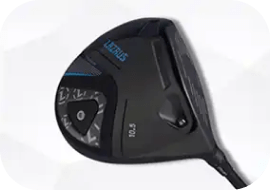
If you are borderline, an adjustable driver head is the practical hedge. Our LAZ2-D comes in senior, regular and stiff, and the loft adjusts two degrees either way, so you can tune launch without re-shafting. That matters more than the letter you pick on day one when choosing a driver.
Weight changes tempo and control as much as flex changes bend. Fit My Golf Clubs gives typical ranges: a driver shaft around 55 to 65 grams, irons 95 to 120 grams in steel or 65 to 85 in graphite. Lighter helps speed, heavier helps control.
Kick point is the spot on the shaft that bends most during the swing. Golf Monthly's explanation is clearest: the lower the kick point, the higher the launch, and the higher the kick point, the lower the launch.
Steel is heavier, feels more consistent to most players and is standard in iron sets. Graphite is lighter, damps vibration and adds speed.
Flex controls how the shaft bends, while length controls where the club bottoms out and how you stand to it. They are separate fittings and fixing one will not fix the other, so if length is your question, start with our guide to club length.
L and A exist for one reason, swing speed, and speed is not a verdict on anyone's ability. TrackMan makes the point better than an argument does. The LPGA Tour average driver club speed is 96 mph, which lands in the regular band above. A 10-handicap female amateur averages 83 mph and a 15-handicap 79 mph, squarely A and L territory.
The recurring problem is that "women's" gets treated as one spec. A set built around a 79 mph swing gets sold to a player swinging 92, and she spends the season fighting a shaft that will not hold up.
Our women's clubs built with the right flex are a starting point, not a category. The women's cavity-back irons ship with women's-flex graphite, and our in-house fitting adjusts length, flex and lie before shipping. Read it alongside our breakdown of men's vs women's clubs.
What shaft flex do I need?
Start with driver swing speed: under 72 mph points to L, 72 to 83 to A, 84 to 96 to R, 97 to 104 to S, and 105 up to X, per MyGolfSpy. No launch monitor? Golf Sidekick puts a 130 to 145 yard 7-iron at A, 145 to 155 at R, 155 to 175 at S.
Should I use regular or stiff shafts?
Under roughly 97 mph with the driver, regular, and most everyday golfers land there. On the line, take regular: a shaft that loads too easily is a smaller problem than one that never loads.
What flex should a senior golfer use?
Age is not the input, speed is, and plenty of seniors still swing in the regular band. Under 84 mph, A flex gets your launch and carry back. Under 72 mph, look at L.
Can the wrong shaft flex cause a slice?
It can contribute. Too stiff for your speed tends to leave the face open, producing the low left-to-right flight that reads as a slice. Rarely the whole cause, but it makes one worse.
Do I need the same flex in my irons and my driver?
Not necessarily. Irons run roughly 10 to 15 mph slower than the driver, per Fit My Golf Clubs, so a stiff driver and regular irons is a normal combination.
Is graphite or steel better for my irons?
Neither outright. Steel is heavier and feels more consistent. Graphite is lighter, adds speed and cuts vibration. Try both.
Match the shaft to the swing you have, not the swing you want. Flex is the highest-leverage spec an everyday golfer can get wrong, and the one the industry is vaguest about, because the letter on the band is not backed by a shared standard.
So do the work yourself. Hit ten 7-irons this weekend, throw out the best and worst, and check the middle eight against the golf shaft flex chart above. Fifteen minutes tells you more than a rack of stock clubs will.
If you have been playing the wrong flex, fixing it need not be costly. Custom fitting should not cost more than the clubs, which is why ours is in-house, and a complete set built to one flex removes the guesswork across all fourteen. Same factories as the names you know. One-third the price. Your swing, your numbers, your call.
Every threshold, benchmark and figure in this post traces to one of the following, all verified 2026-08-12.