


Table of Contents:
- The Driver: Your First Golf Set’s Power Club
- Add One Fairway Wood or Hybrid
- Irons: 5-Iron Through Pitching Wedge
- The Sand Wedge
- The Putter: Where Most Strokes Are Won
- What’s Optional (and When to Add It)
- What to Skip for Now
- First Golf Set Budget Breakdown
- Why a Complete Set Beats Piecing One Together
- First Golf Set: Frequently Asked Questions
- Final Thoughts on Building Your First Golf Set
So you’ve decided to take up golf. Welcome to a game that will frustrate you, challenge you, and reward you for the rest of your life. But before you chase that first pure strike, you need a set of clubs of your own.
Building your first golf set can feel overwhelming. There are dozens of club types, endless brands, and price tags that swing from a few hundred dollars to several thousand. Where do you even start?

Nearly every course requires you to bring your own clubs. You could rent, but you’ll improve faster with a consistent set you know and trust — clubs you can feel your way into round after round.
This guide breaks down exactly what belongs in your first golf set, what you can skip for now, and how to spend your budget wisely. Let’s build a bag that fits your game without draining your wallet.
The Driver: Your First Golf Set’s Power Club
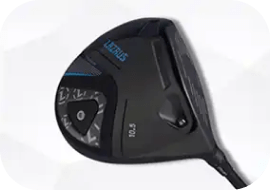
The driver is the fun club everyone loves to hit. Drivers come in all shapes, sizes, and price points, so before you commit, hit a few balls to see how one feels in your hands.
Match the Shaft Flex to Your Swing
The first thing to nail down is shaft flex, which should match your swing speed. Your main options are Ladies (L), Senior (A), Regular (R), Stiff (S), and Extra Stiff (X).
If your shaft is too stiff, you’ll hit the ball too low and lose distance. If it’s too flexible, you’ll struggle with accuracy and inconsistent strikes.
Shaft weight matters too. The average man plays a 50–65 gram shaft. Lighter shafts add speed for slower tempos, while heavier shafts give more control to aggressive swings.
Choose the Right Loft and Head Type
Modern drivers use a 460cc head, but their weight distribution and internal design vary widely. The three main categories are:
-
Max / Game-Improvement: Maximum forgiveness with a draw bias to help cure a slice — a great fit for beginners and mid-handicappers.
-
Standard / Neutral: A balance of distance, workability, and moderate forgiveness.
-
Low-Spin: Built for skilled players with fast swing speeds who need a more penetrating, lower-spin ball flight.
Loft heavily dictates how high the ball flies. Most drivers sit between 9–10.5 degrees, while women’s drivers run 10.5–12 degrees. As a rule, slower swing speeds benefit from more loft to keep the ball in the air longer.
Don’t Buy Off the Rack
You should also like how your driver looks. The shape at address, the color of the crown, and the sound and feel at impact all build confidence as you stand over the ball.
Avoid buying a driver off the rack. Visit a local retailer or golf pro and test combinations on a launch monitor to find the head-and-shaft combo that maximizes your ball speed and carry. Premium new drivers are expensive, but last year’s model or the secondhand market can offer incredible value.
Add One Fairway Wood or Hybrid
Your next decision is whether to add a hybrid or a fairway wood. Neither is universally better — the right choice depends on your swing style, distance needs, and the turf you usually play from.
When to Choose a Hybrid
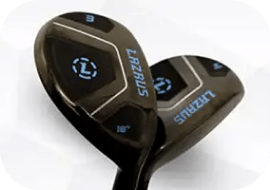
Hybrids replace hard-to-hit long irons, offering an iron-like swing with the forgiveness of a wood. They’re built for accuracy and versatility. Choose a hybrid if you:
-
Struggle to hit long irons like a 3-iron or 4-iron
-
Need versatility out of the rough or fairway bunkers
-
Have a steeper, more aggressive swing
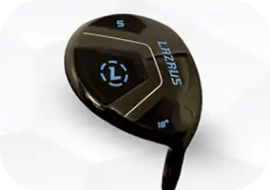
If that sounds like your game, the forgiving Lazrus hybrids are an easy way to fill that gap without overpaying.
When to Choose a Fairway Wood
Fairway woods feature larger heads and longer shafts. They’re primarily distance clubs, built for sweeping swings and maximum carry off the tee or fairway. Choose a fairway wood if you:
-
Want to maximize distance on long par-5s
-
Prefer a sweeping swing
-
Need higher, softer-landing shots into long par-4s and par-5s
Irons: 5-Iron Through Pitching Wedge
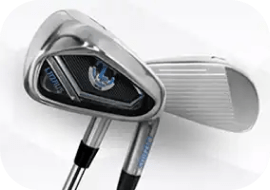
When buying a 5-iron through pitching wedge set, focus on four things: loft gapping, clubhead construction, shaft material, and how your pitching wedge blends into your short wedges.
Mind Your Loft Gapping
Consistent gaps between irons keep your yardages predictable. Aim for even spacing of 4 to 5 degrees of loft between clubs so you don’t end up with awkward distance gaps.
Pick the Right Clubhead
Clubhead style depends on your skill level. The three main options:
-
Hollow-body heads: Maximum distance and forgiveness — ideal for beginners.
-
Cavity backs: The most common style; perimeter weighting creates a larger sweet spot, great for mid-handicappers.
-
Muscle backs / blades: Maximum workability with very little forgiveness, suited to low-handicap and scratch golfers.
Steel vs. Graphite Shafts
Steel shafts are heavier and deliver better control and consistency — the standard for players with average to high swing speeds. Graphite shafts are lighter and easier to swing, ideal for seniors, juniors, or slower swing speeds that need a higher launch.
Matching vs. Specialty Pitching Wedge
If you want full swings with the same forgiveness as your irons, get a pitching wedge that matches the set. If you want enhanced spin, versatility, and feel on delicate shots around the green, a specialty pitching wedge is better — usually the preference of lower-handicap golfers.
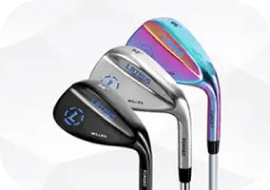
The Sand Wedge
Gene Sarazen added a heavy flange to the sole of his nine-iron and created the first sand wedge, letting the club bounce off the sand rather than dig into it. Sand wedges have come a long way since, and today you have four key factors to weigh: loft, bounce, grind, and groove design.
Loft, Bounce, and Grind Explained
A traditional sand wedge has 56 degrees of loft, ranging from 54 to 58. Before buying, check your pitching wedge’s loft and aim for 4 to 6 degrees of separation so you avoid large yardage gaps.
Bounce is the angle between the club’s leading edge and its sole:
-
High bounce (12–16 degrees): Best for soft sand, thick rough, and steep, digging swings.
-
Low bounce (8–11 degrees): Ideal for firm, hard-packed sand and shallow, sweeping swings.
The sole shape (grind) determines how the club moves through the sand. Standard grinds are versatile for all-around play, while wider soles help prevent the club from burying in loose, fluffy sand.
Finally, fresh, sharp grooves are essential for spin and stopping the ball on the green. Look for deep score lines, and consider full-face grooves for maximum friction out of the sand.
The Putter: Where Most Strokes Are Won
Putts typically account for around 40% of the shots in an average round, so this is no place to cut corners. When choosing a putter, focus on the right length for your posture, a toe hang that matches your stroke, and a head shape that frames the ball well. Ultimately, it should look good to your eye and feel comfortable.
Find the Right Length and Balance
To check length, take your normal putting stance. Your eyes should sit directly over (or just inside) the ball, your arms should hang relaxed under your shoulders, and the sole should rest flat on the ground. Most players use a putter between 33 and 35 inches.
Balance controls how much the face rotates during your stroke:
-
Face-balanced: Best for a “straight back, straight through” stroke.
-
Toe-hang: Best for an arced or “gate-swing” stroke.
Blade vs. Mallet Head Shapes
Head shape mostly comes down to preference and how the putter frames the ball, but there are real differences. Blade putters have thinner, traditional heads suited to golfers who consistently strike the center of the face. Mallet putters have longer, deeper heads with weight pushed to the perimeter, making them more forgiving and resistant to twisting on off-center hits.
If you want pro-level performance without the pro-level price, Lazrus zero-torque putters are CNC-machined and 100% made in the USA in Boise, Idaho.

What’s Optional (and When to Add It)
Gap Wedge
A gap wedge bridges the distance and loft between your pitching wedge and sand wedge. It typically carries 48 to 52 degrees of loft and fills the awkward 90–100 yard range.
Do you need one? Check the loft between your pitching wedge and sand wedge. If your pitching wedge is 44–46 degrees and your sand wedge is 54–56 degrees, a gap wedge is worth it. It also helps if you have a yardage gap of more than 15 yards anywhere in your short irons. If you have a smooth, repeatable swing and are comfortable taking something off a shot, you can likely get by without one.
Lob Wedge
A lob wedge typically has 58–60 degrees of loft. It’s used when you’re short-sided with little green to work with and need to pop the ball up quickly and stop it fast. It also shines from deep rough and on flop shots.
The catch: a lob wedge leaves very little room for error. Hit it thin and you’ll send the ball flying over the green. For that reason, lob wedges are usually most useful for low-handicap and scratch golfers.
Long Irons (3 and 4)
Only buy a 3- or 4-iron if your swing speed is fast enough to get the ball airborne and you need them for specific fairway or punch shots.
-
3-iron: Typically for low-handicap golfers (0–5) with high swing speeds and consistent ball-striking. Great for low, penetrating punch shots, but extremely unforgiving and hard to hit off the ground.
-
4-iron: For mid-to-low handicappers. Useful off the tee on tight fairways when you need less spin than a hybrid, but hard to stop on the green and easily snagged in thick rough.
If you’re a high-handicap golfer, skip both and reach for a 4-hybrid instead. If you’re a low-handicap player who wants to replace a long iron, consider a utility iron — a hollow-body design with the look and control of an iron and the added distance and forgiveness of a hybrid.
What to Skip for Now
Brand-New Premium Clubs
Buying premium brand-name clubs new is only worth it if you’re committed to the game and have a consistent swing. Weigh three things before you spend:
-
Your skill level: Beginners usually have inconsistent swings and often nick up their clubs while learning.
-
New vs. pre-owned cost: A brand-new, top-tier iron set or driver can cost thousands of dollars.
-
Resale value: Premium clubs hold their value and are durable, so certified pre-owned models (1–2 years old) get you top-tier tech at a fraction of the price.
If you play frequently, have a consistent swing, and have been professionally fit, premium clubs can make sense. If you’re a casual golfer or beginner, buy a used premium set and put the savings toward lessons.
Custom Fitting at the Beginner Stage
Beginners generally don’t need a full, expensive custom fitting right away. Your swing mechanics are still changing, so a detailed session can quickly become outdated.
You should still get a quick static measurement for basic club length and lie angle to prevent bad habits. An off-the-rack set is fine while your swing develops — with two exceptions: if you’re much taller or shorter than average (or have unusually long or short arms), standard clubs can wreck your posture, and grip size matters too, since a grip that’s too thin or thick makes holding the club correctly difficult. When the time is right, Lazrus offers in-house custom fitting to dial things in.
Used Premium Sets (Timing Matters)
There’s real value in used premium clubs. If you have the budget, you can buy them right away. If you’re a beginner, wait three to five months — or until you can consistently make contact — before investing in premium used clubs. Buying forgiving brands from three to five years ago beats a cheap starter set every time.
First Golf Set Budget Breakdown
$300–$500 Total Budget
At this level, your path depends on skill:
-
Beginners: Buy a high-quality, pre-assembled package set. You get a full, matched lineup — driver, woods, hybrids, irons, putter, and a bag — for less than buying each piece individually.
-
Intermediate players: Skip entry-level packages and buy high-quality, used individual clubs from the last 4–5 years. Focus on a core setup: driver, 7-iron, pitching wedge, putter, and a hybrid.
$500–$800 Total Budget
This is the sweet spot for either a high-quality, ready-to-play box set or a premium gently used setup.
-
Beginners who want to play now: Grab a premium package set. These come in 16-piece sets (driver, fairway wood, hybrids, irons 6–PW, wedges, putter, and a stand bag) or 10-piece options.
-
Growing players: Buy 4-to-6-year-old premium clubs from a reputable second-hand retailer. You can piece together a bag that lasts for years and is more forgiving than cheaper box sets.
Why a Complete Set Beats Piecing One Together
The Cost Math
A complete set is ideal for beginners and casual players because it takes the guesswork out of buying. You get perfectly matched, highly forgiving clubs designed to get the ball airborne — no stressing over mismatched shaft flexes, club lengths, and lofts from different manufacturers.
A complete set flows smoothly from one club to the next, and most include a matching stand or cart bag and headcovers, so you don’t have to buy those separately.
Lazrus Complete Sets
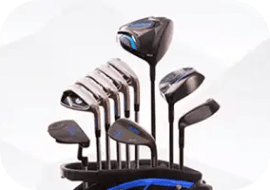
A complete set of Lazrus clubs is cost-effective and immediately playable: matched, forgiving clubs at a fraction of premium-brand prices, so you get a full bag without going broke.
Lazrus clubs are built with large, forgiving sweet spots and deep cavities that help you get the ball airborne and straight without a perfect swing. Because the set is designed to work together, you get consistent gapping throughout the bag.
First Golf Set: Frequently Asked Questions
Can I just buy used clubs?
Absolutely — used clubs are a smart way to save money. Just watch for a few pitfalls. Wedges lose significant spin and distance control after about 75 rounds due to microscopic groove wear, even when they look fine. Inspect the sweet spot and sole for gouges, cracks, and rust, and shop only from reputable retailers that authenticate their stock, since high-end brands are sometimes faked. Remember that clubs aren’t one-size-fits-all: the wrong length, flex, or lie angle can hurt your swing.
Do I need a golf bag?
Yes — a bag is a practical necessity and the only way to carry 14 clubs, balls, and tees, and many courses require one. Match the bag to how you play:
-
Walking: A lightweight stand bag with dual straps to spread weight across your back.
-
Riding: A cart bag with forward-facing pockets and a strap pass-through.
-
Light and fast: A Sunday or pencil bag for nine holes or a quick range trip.
-
Flying: A heavily padded travel bag to protect your clubs.
Should I get fitted as a beginner?
A full, premium fitting isn’t necessary or recommended for beginners. Because your swing is still evolving, an expensive fitting will likely become outdated, and you need a repeatable swing to capture accurate data like swing speed and launch angle. Do get a quick static fitting so your clubs aren’t fighting your natural build.
What about junior clubs for kids?
Get junior-specific clubs rather than cut-down adult clubs, which are too heavy and too stiff. Junior clubs use lightweight graphite or soft steel shafts with “junior flex” that helps kids get the ball airborne, plus smaller grips for smaller hands. Heavy, overly long clubs force kids into bad habits that are hard to break.
Final Thoughts on Building Your First Golf Set
Building your first golf set comes down to one idea: buy the clubs that make the game easier to learn, skip the ones that don’t, and don’t overpay for either. Start with a forgiving driver, one fairway wood or hybrid, a 5-iron through pitching wedge set, a sand wedge, and a putter — then add specialty wedges and long irons as your game grows.
The single smartest move for most new golfers is to start with a matched, forgiving complete set and invest the savings in practice and lessons.
Ready to build a bag that performs without the premium price tag? Explore the Lazrus complete sets — pro-quality clubs at about a third of what the big brands charge, backed by a 30-day guarantee.